Serial Killer Israel Keyes, Evil Genius? We Don’t Think So w/Julia Cowley FBI
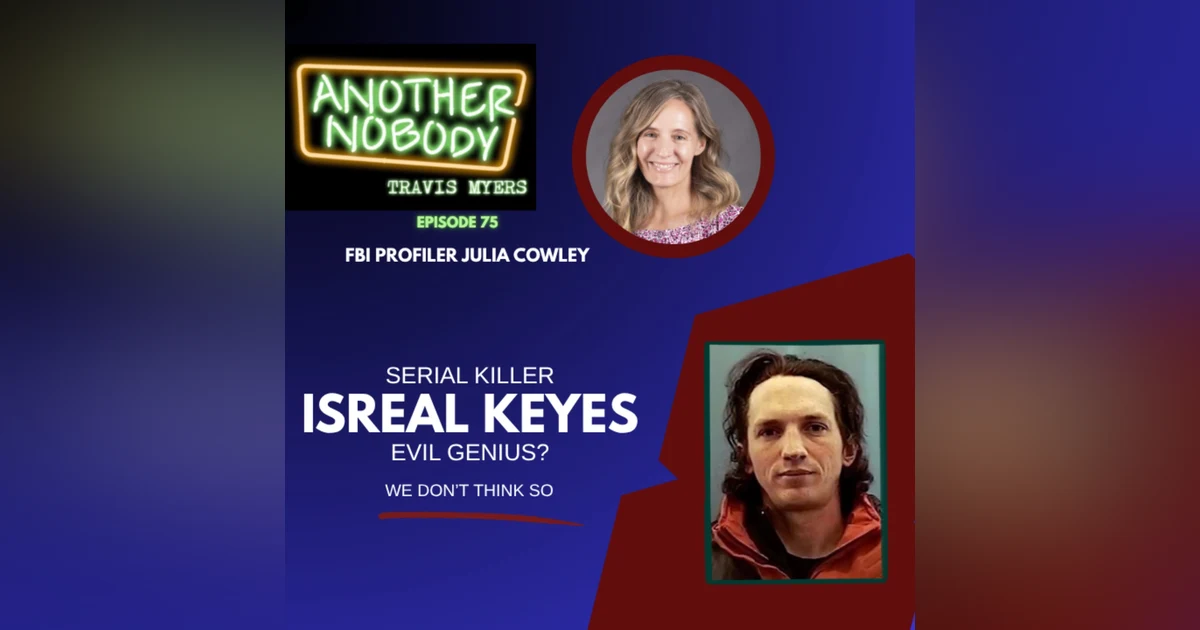
How Israel Keyes Redefined the Notion of a Serial Killer: Insights from a Profiler

For many, the term "serial killer" conjures images of notorious figures, their crimes meticulously documented. But what happens when the reality of a killer is shrouded in mystery and speculation? This is the case with Israel Keyes, a man whose methods and motives have intrigued and horrified. In this blog post, we explore the insights shared by Julia Cowley, a profiler who worked on two of Keyes' cases, as she unpacks the complexities surrounding his criminal activities.
## Understanding the Mind of Israel Keyes
### The Cases of Bill and Lorraine Courier and Samantha Koenig
Julia Cowley worked on the cases of Bill and Lorraine Courier in Essex, Vermont, and Samantha Koenig in Anchorage, Alaska. These cases were pivotal in understanding Keyes' behavior and the challenges faced by investigators. While Keyes is believed to have killed potentially more than eleven individuals, Cowley expresses skepticism regarding the actual number.
Keyes’ approach was particularly alarming due to his ability to target strangers without any apparent connection, which complicates investigations significantly. According to Cowley, the difficulty in linking Keyes to other unsolved cases stems from his mobility and the random nature of his victim selection. Many believe that his crimes could be linked to numerous unsolved cases across the United States, leading to a frenzy of speculation among both the public and law enforcement.
### Kill Kits: Fact or Fiction?
One of the most intriguing aspects of Keyes’ narrative is the concept of his "kill kits"—buried tools and supplies he allegedly prepared for future murders. Cowley discusses the lore surrounding these kits, which include items like weapons and duct tape. Despite extensive searches, law enforcement has yet to confirm the existence of these kits, leaving many to wonder whether they were a product of Keyes’ imagination or if they truly exist.
The excitement surrounding the hunt for these kits has attracted amateur detectives and true crime enthusiasts, much like a modern treasure hunt. Cowley appreciates the efforts of these individuals, noting that their enthusiasm can sometimes yield valuable information for law enforcement.
## The Challenge of Profiling Serial Killers
### Behavioral Analysis and Victimology
Cowley emphasizes the importance of understanding the behavioral patterns of serial killers. In her work on Samantha Koenig's case, she analyzed video footage of the abduction, trying to discern whether there was a prior connection between Keyes and Koenig. This meticulous analysis highlights a key aspect of profiling: understanding the victim’s background and potential motivations behind the crime.
The rarity of serial murders complicates profiling efforts. Cowley notes that while they see numerous cases, the actual incidence remains low. This makes it critical to approach each case with a fresh perspective, analyzing behavioral patterns rather than relying solely on established norms.
### The Public Fascination with Serial Killers
Cowley and Myers discuss the public's fascination with serial killers, likening it to a heroic narrative that often oversimplifies the complexities involved in these cases. The allure of the unknown and the thrill of solving a mystery can lead to a distorted perception of reality, with many attributing more victims to killers than they may have actually claimed.
This fascination can create challenges for law enforcement, as public speculation may muddy the waters of an investigation. Cowley advises caution, emphasizing the need for evidence-based conclusions rather than sensationalized narratives.
Hosted on Acast. See acast.com/privacy for more information.